

Prompt Detail
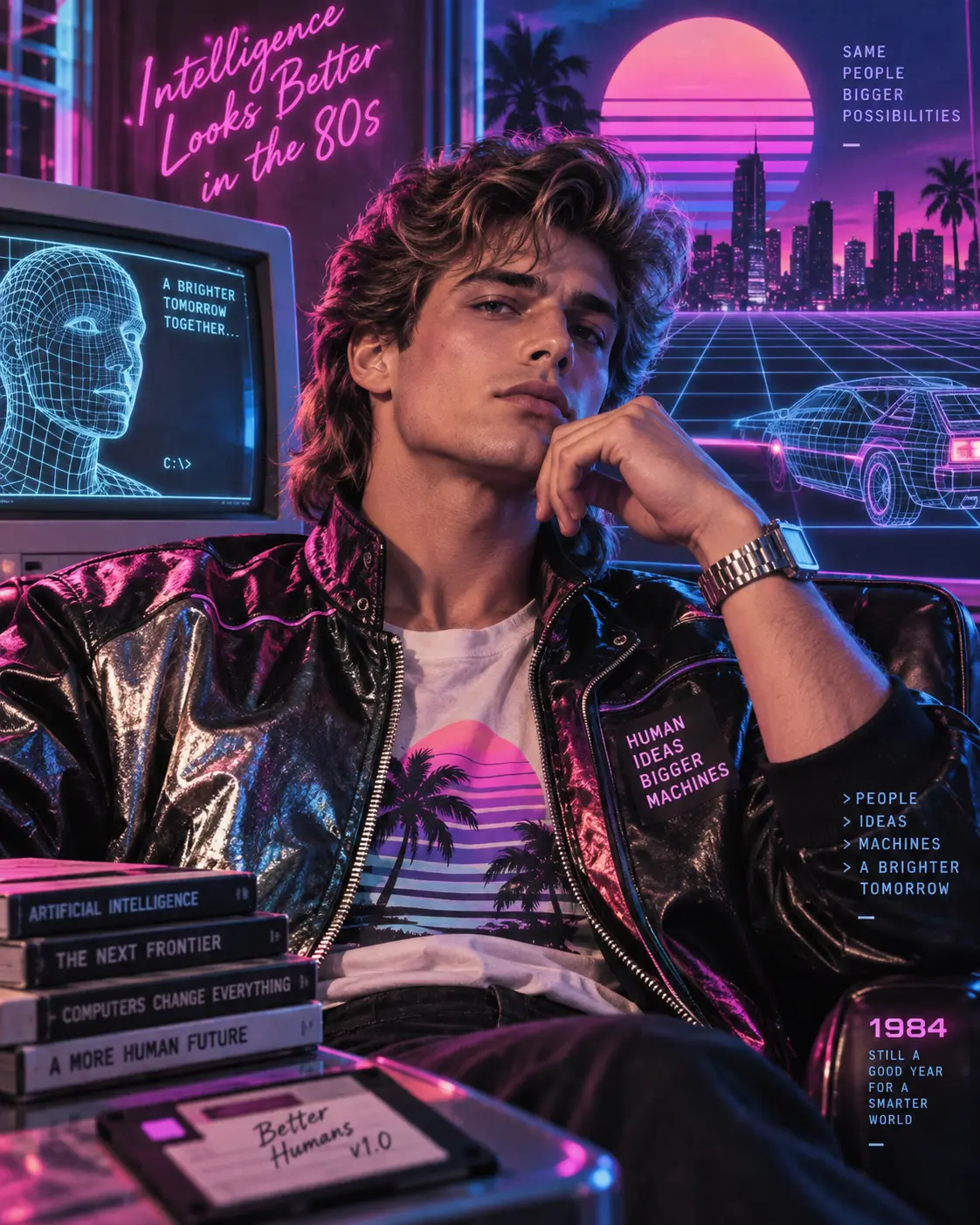
1980s Retro-Futuristic AI Portrait with Neon Synthwave Aesthetic
Copy Prompt
Copy the full prompt text to use it anywhere you like.
Copy was blocked by your browser. Select the prompt text below and copy it manually.
Choose image aspect ratio
Selected:Original keeps the saved wording. Choosing a ratio edits the copied text; also set the output size in your image tool.
Copy was blocked by your browser. Select the prompt text below and copy it manually.
Prompt guide
How to use this AI image prompt
Overview
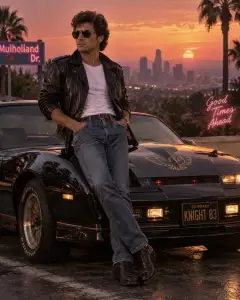
This 1980s aesthetic portrait prompt is designed to turn a reference photo of an adult man into a polished retro-futuristic editorial image while preserving his recognizable identity. It combines authentic facial features with a glossy leather bomber jacket, synthwave graphics, vintage computer equipment, neon city scenery, and cinematic magenta-and-cyan lighting.
The composition places the subject in a dark leather chair using a relaxed, confident pose and direct eye contact. A CRT monitor, wireframe graphics, floppy disk, technology manuals, glowing sunset, perspective grid, palm trees, and distant wireframe sports car establish the period-inspired setting. A vertical 9:16 frame makes the result suitable for social posts, mobile wallpapers, profile features, and poster-style artwork.
This can be used as a ChatGPT image prompt, Gemini image prompt, or general AI image prompt for tools that accept reference images and detailed scene instructions. It also works as an AI photo editing prompt when the goal is to retain the person while substantially changing clothing, lighting, and environment. Results depend on each model’s identity-preservation and reference-image capabilities, so some refinement may be necessary.
Best Use Cases
This prompt is especially useful for men who want to join the 1980s AI portrait trend without receiving a generic face. It suits creators, photographers, musicians, fashion accounts, technology enthusiasts, and personal-brand users looking for an expressive retro profile image.
The detailed studio environment makes it a strong choice for synthwave posters, album-cover concepts, themed birthday artwork, editorial portraits, social media campaigns, and nostalgic technology content. Its high-contrast lighting can also produce an attention-grabbing thumbnail or magazine-cover concept, although titles and logos are intentionally excluded to avoid unreliable AI-generated text.
As a Gemini photo prompt, it is best suited to a clear individual portrait with visible facial details and a hairstyle the model can follow. The thoughtful hand-near-chin pose adds personality for fashion or professional creative profiles, while the neon technology setting supports gaming, coding, electronic music, and retro-computing themes.
How to Customize This Prompt
Start with a sharp, well-lit reference photo showing the subject from the front or a slight angle. Avoid heavy filters, sunglasses, deep shadows, or hair covering important facial features. A reference with neutral lighting gives the model better information about skin tone, face shape, and eye placement.
Useful adjustments include:
- Change the jacket to a denim jacket, colorful windbreaker, or tailored 1980s suit while keeping the reflective neon lighting.
- Replace the T-shirt artwork with another abstract, non-branded synthwave design.
- Make the expression warmer, more intense, or subtly playful without altering facial identity.
- Increase the CRT monitor’s prominence for a technology-focused composition, or emphasize the skyline for a cinematic poster.
- Switch 9:16 to 4:5 for an Instagram portrait or 1:1 for a profile image.
- Reduce the holographic details if a cleaner fashion-editorial result is preferred.
When adapting this into an AI photo editing prompt, state which original traits must remain untouched before describing optional changes. Avoid requesting a different age, ethnicity, face structure, and hairstyle at the same time, because those instructions can conflict with identity preservation.
Tips for Better Results
The scene contains many visual elements, so prioritize the face, pose, lighting, wardrobe, and CRT monitor before secondary background details. If the first generation feels cluttered, simplify the car, holograms, manuals, or interface graphics rather than removing the core neon studio concept.
For more reliable output:
- Use a high-resolution reference with only one person present.
- Keep identity or character-reference strength moderately high when the platform provides that control.
- Generate several variations and select the version with the best facial resemblance before upscaling.
- Inspect fingers, wristwatch placement, jacket zippers, eye direction, and reflections at full size.
- Ask for abstract screen graphics instead of readable labels, logos, or interface text.
- Preserve realistic pores and fine hair strands by avoiding aggressive beauty enhancement.
- Use inpainting or regional editing to repair hands without regenerating the face.
- Reduce saturation if magenta and cyan light begins to overpower natural skin tones.
For either a Gemini photo prompt or ChatGPT image prompt workflow, make one or two controlled revisions at a time. Changing the pose, wardrobe, camera angle, expression, and background simultaneously can make it difficult to identify which instruction caused weaker resemblance.
What to Expect
A successful result should resemble a premium 1980s technology magazine portrait recreated with modern photorealistic detail. Expect a centered adult male subject, crisp eyes, believable skin texture, glossy leather, metallic highlights, and colored rim lighting. The softened background should remain recognizable enough to reveal the CRT computer, neon sunset, skyline, grid, and other retro-futuristic details.
The 50mm-style perspective and medium close-up framing should feel natural rather than exaggerated. Analog grain, neon bloom, rich contrast, and violet-blue shadows will provide nostalgia without making the portrait look like a flat illustration.
Identity accuracy, hand anatomy, tiny props, and reflections may vary between image models. Some systems may simplify the distant car or decorative interfaces, while others may overemphasize neon effects. Treat the first result as a strong creative draft, then refine facial resemblance, hand structure, background density, and color balance through targeted follow-up instructions.