



Prompt Detail
1980s Vintage Car Portrait with Leather Jacket Fashion
Copy Prompt
Copy the full prompt text to use it anywhere you like.
Copy was blocked by your browser. Select the prompt text below and copy it manually.
Choose image aspect ratio
Selected:Original keeps the saved wording. Choosing a ratio edits the copied text; also set the output size in your image tool.
Copy was blocked by your browser. Select the prompt text below and copy it manually.
Prompt guide
How to use this AI image prompt
Overview
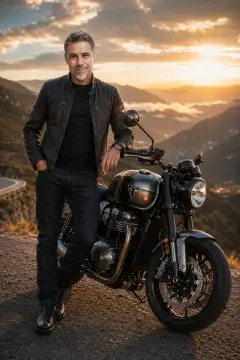
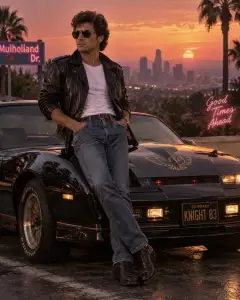
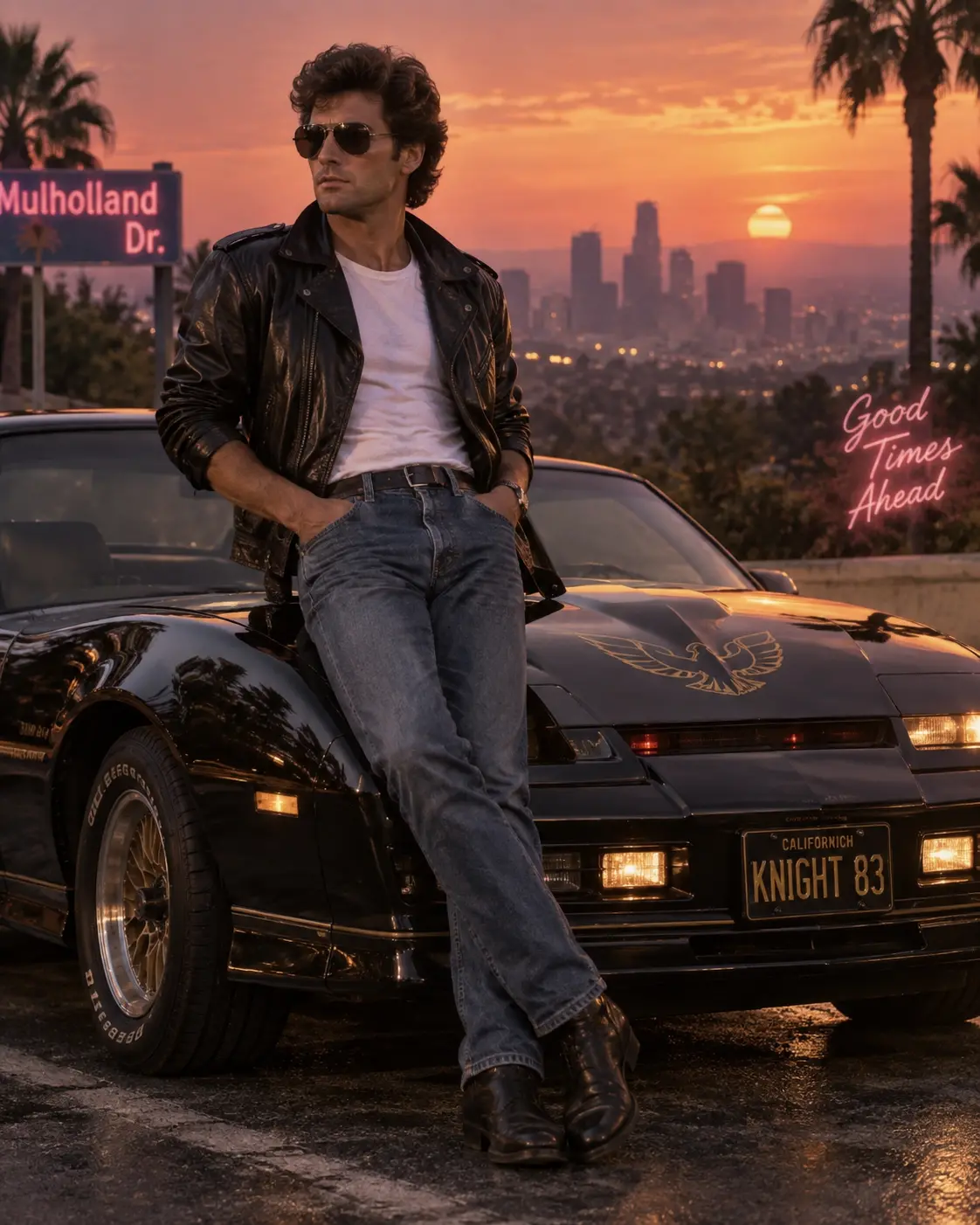
The 1980s Men's Vintage Car Portrait prompt is designed to turn a reference photo into a polished, cinematic fashion portrait while preserving the subject’s recognizable identity. It places one adult man beside a glossy black, retro-inspired sports coupe at a Los Angeles-style hilltop overlook, combining confident movie-star styling with warm sunset atmosphere.
The visual direction draws on late-1980s automobile advertising, editorial menswear photography, and classic cinema. A black leather biker jacket, white T-shirt, faded high-waisted jeans, boots, aviator sunglasses, palm trees, atmospheric haze, and magenta-amber color grading create a distinctive period aesthetic. The vertical 9:16 framing makes it especially suitable for mobile-first artwork and social content.
This detailed AI image prompt also specifies realistic skin, clothing, vehicle reflections, anatomy, lighting, and composition. It can be adapted as a ChatGPT image prompt, Gemini image prompt, or Gemini photo prompt, depending on whether the chosen model supports reference-photo input and portrait generation.
Best Use Cases
This prompt is ideal for adults who want a personalized 1980s-inspired portrait without losing the facial qualities that make the reference subject recognizable. It works particularly well for retro profile pictures, cinematic social posts, birthday artwork, fashion concepts, character posters, personal branding, and vintage automobile-themed campaigns.
Photographers and creative directors can use it to explore styling before arranging a real shoot. Car enthusiasts may use it for nostalgic artwork featuring an original, unbranded coupe rather than a specific manufacturer. It is also useful as an AI photo editing prompt when the goal is to retain a person’s identity while replacing the wardrobe, pose, vehicle, lighting, and location.
Because the concept combines a serious expression, heroic perspective, and luxury editorial finish, it is best suited to confident or aspirational imagery rather than casual documentary portraits.
How to Customize This Prompt
Start with a clear reference photo showing the subject’s face, hairstyle, and natural skin tone. A sharp, evenly lit image usually gives the model more reliable identity information than a distant selfie, heavily filtered portrait, or face partly hidden by accessories.
Useful customizations include:
- Change the black biker jacket to a brown leather jacket or period bomber while keeping the white crew-neck shirt and vintage denim.
- Adjust the expression from serious to subtly relaxed, but retain the distant gaze and confident posture.
- Move the sun higher or lower to control the strength of rim lighting and silhouette effects.
- Increase skyline visibility for a stronger Los Angeles-inspired setting, or emphasize palm trees and the overlook for a cleaner composition.
- Change the coupe’s gold accents, wheel finish, or body details while keeping it original and free from recognizable branding.
- Request three-quarter framing if facial detail matters most, or full-body framing when boots, stance, and car proportions are priorities.
- Reduce film grain for a cleaner commercial result or increase it slightly for a more authentic analog-film mood.
When adapting this as a Gemini image prompt or another model-specific request, keep the identity, pose, composition, lighting, and exclusion instructions clearly separated. This helps the system distinguish essential requirements from optional styling.
Tips for Better Results
Identity preservation and complex car geometry can be challenging in the same frame. Generate several versions, then select the image with the strongest facial resemblance, natural hands, and most believable vehicle structure.
- Use a reference image with one clearly visible adult subject and no distracting people.
- Confirm that sunglasses do not obscure too much of the face. If resemblance is weak, request sunglasses held in one hand or lowered slightly.
- Inspect fingers inside or near the pockets, crossed ankles, jacket zippers, wheel alignment, headlamps, and reflections.
- Keep the front fill light in the instructions so backlighting does not leave the face underexposed.
- If the car becomes too dominant, ask for the man to occupy more vertical space while leaving the coupe across the lower frame.
- If colors look artificial, reduce saturation and emphasize natural skin tones, controlled highlights, and subtle magenta ambience.
- Avoid adding named car brands, emblems, signs, or plates when a clean editorial image is preferred.
For an AI photo editing prompt, make changes in stages if the model struggles: establish identity and wardrobe first, then refine the car, background, and cinematic grading. Always review generated details rather than assuming every model interprets long instructions equally.
What to Expect
A successful result should resemble a premium late-1980s automobile fashion campaign: one recognizable man posed beside an angular black sports coupe, framed by palms, haze, skyline lights, and a large orange sunset. Expect warm edge lighting, readable facial detail, glossy reflections, faded denim texture, realistic leather creases, and a softly blurred metropolitan background.
The 85mm-inspired perspective and slightly low camera position should create a flattering, heroic portrait without extreme distortion. Fine grain and controlled contrast will add nostalgic film character while preserving a photorealistic finish.
Results will vary between tools. Some models follow identity references closely, while others prioritize the wardrobe, car, or scenery. Treat this AI image prompt as a strong creative foundation, then refine resemblance, anatomy, reflections, and framing through focused follow-up generations.