





Prompt Detail
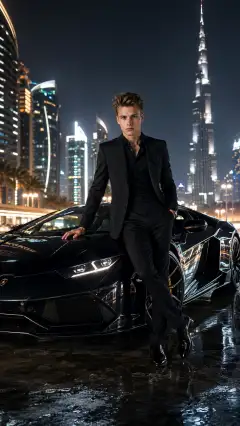
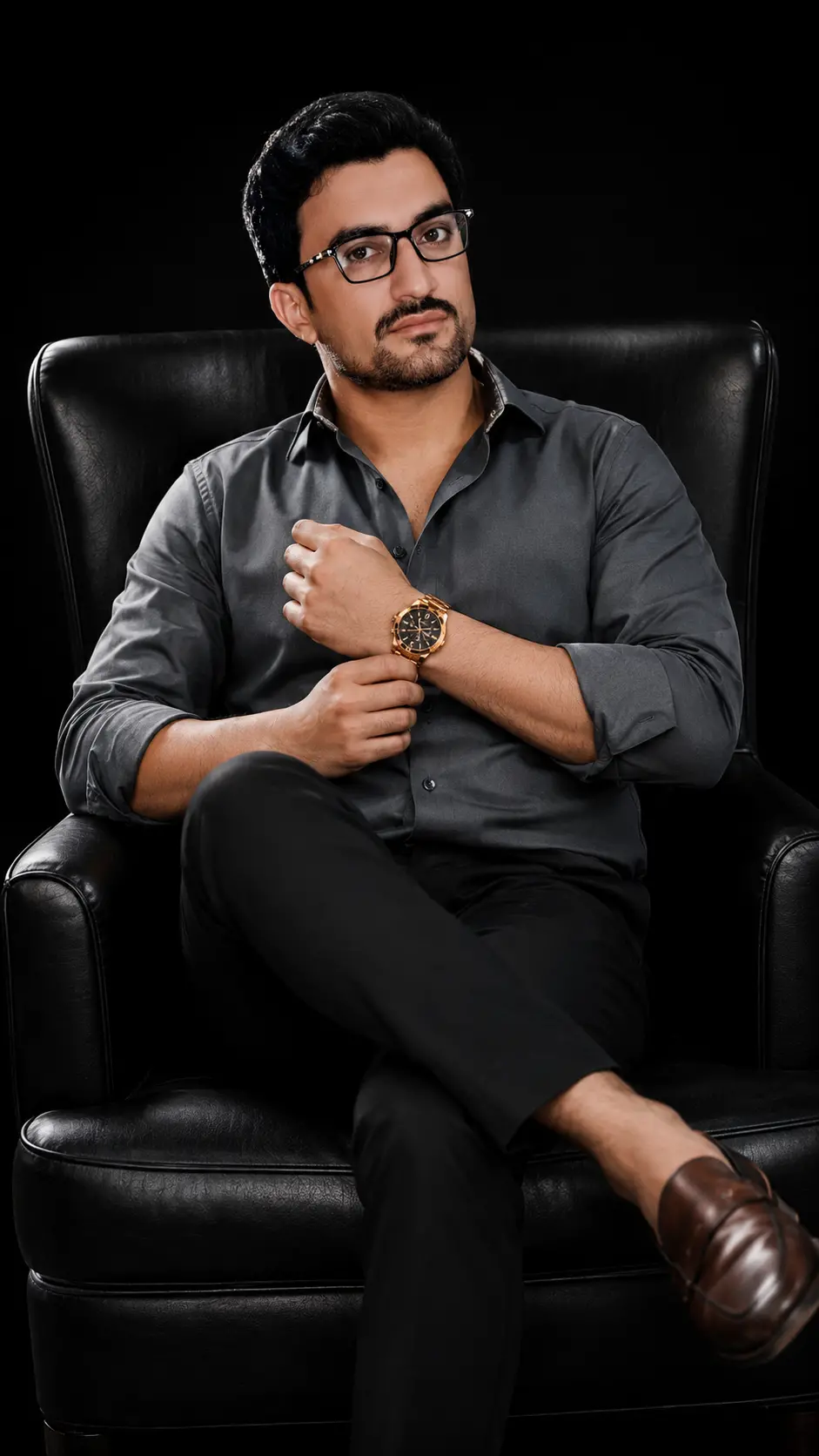
Confident Man in Slate Gray Shirt and Black Trousers Sitting in Black Leather Chair
Copy Prompt
Copy the full prompt text to use it anywhere you like.
Copy was blocked by your browser. Select the prompt text below and copy it manually.
Choose image aspect ratio
Selected:Original keeps the saved wording. Choosing a ratio edits the copied text; also set the output size in your image tool.
Copy was blocked by your browser. Select the prompt text below and copy it manually.
Prompt guide
How to use this AI image prompt
Overview
This polished AI image prompt creates an ultra-realistic cinematic portrait of a confident, well-groomed man seated in a premium black leather executive chair. His slate-gray button-down shirt, tailored black trousers, brown loafers, and golden chronograph watch establish a refined business-casual look with a quiet-luxury character. The deep-black studio backdrop keeps attention on the subject, while low-key Rembrandt lighting adds drama, depth, and professional editorial quality.
The composition is designed as a vertical, centered medium portrait extending from the head to approximately mid-thigh. Direct eye contact, a subtle smile, relaxed shoulders, and a crossed-leg pose balance authority with approachability. The watch-adjusting gesture provides a natural secondary focal point and makes the portrait especially useful for men’s fashion photography or luxury personal branding.
This can be used as a ChatGPT image prompt, Gemini image prompt, or general AI image prompt. It also works as a Gemini photo prompt when a supported reference photo is supplied. As an AI photo editing prompt, it can help restyle an existing portrait while preserving the person’s recognizable facial characteristics, although identity accuracy varies by model.
Best Use Cases
This prompt is ideal for adult men who want a sophisticated studio portrait without the formality of a full suit. It suits entrepreneurs, executives, consultants, speakers, creators, and professionals building an authoritative personal brand. The understated wardrobe can work well for profile photography, portfolio material, business announcements, editorial features, and social media campaigns.
Fashion-focused users can apply it to slate-gray shirt styling, luxury wristwatch promotion, loafers, or premium business-casual outfit concepts. The vertical 9:16 format is particularly practical for Stories, Reels covers, mobile advertisements, and full-screen promotional graphics. It can also produce a dramatic magazine-cover foundation, provided extra space is requested if headlines or branding will be added later.
The concept is most appropriate when the desired result should feel confident and expensive but not flashy. The black leather chair, minimal background, warm expression, and controlled lighting create a versatile balance between corporate portraiture and cinematic fashion photography.
How to Customize This Prompt
Adjust only a few details at a time so the model retains the strong composition and lighting plan. Useful customization options include:
- Change the shirt from slate gray to charcoal, navy, or another restrained business-casual color while keeping the black trousers.
- Replace the golden chronograph with a simpler metal or leather-strap watch if a subtler luxury aesthetic is preferred.
- Request a neutral expression for a more authoritative portrait or a slightly broader smile for an approachable personal-brand image.
- Modify the crop to waist-up for profile use or leave more negative space above and beside the subject for magazine text.
- Keep the 85mm portrait look for flattering facial proportions, or request a slightly wider composition if the loafers and chair should be more visible.
- Reduce the shallow depth of field if the watch, shirt details, and face must all appear consistently sharp.
When using a reference image, choose a clear, front-facing photo with visible facial features and lighting that does not conceal the eyes. Use only a photo you have permission to upload. Rather than relying on a claim of perfect matching, describe the facial traits that matter most and review the generated result carefully.
Tips for Better Results
Strong outputs depend on clear priorities. Face, eyes, hands, watch, clothing, pose, and lighting are all detailed elements, so some models may not render every feature equally well on the first attempt.
- Prioritize sharp eyes and natural facial texture before secondary details such as stitching or chair texture.
- Ask for anatomically correct hands, realistic fingers, and a properly aligned watch face because the adjusting gesture is visually complex.
- Reinforce that the watch belongs on the right wrist if the model reverses accessories or mirrors the pose.
- Preserve the large diffused light from camera-left, soft shadow on the opposite side, and subtle rim light to maintain the intended Rembrandt effect.
- Request visible separation between dark trousers, the black chair, and the seamless background so details do not merge.
- Avoid adding multiple accessories, background props, or bright colors that compete with the face and wristwatch.
- Generate several versions and compare facial likeness, hand anatomy, fabric folds, and the crossed-leg posture before selecting a final image.
If the platform supports negative instructions, exclude distorted hands, extra fingers, asymmetrical eyes, plastic skin, warped watch markings, crushed black clothing, harsh highlights, and distracting background objects. For editing workflows, make one targeted correction at a time rather than regenerating the entire portrait unnecessarily.
What to Expect
The expected result is a vertical luxury editorial portrait with cinematic contrast, realistic skin texture, crisp facial detail, and a creamy, unobtrusive background. The face should dominate the viewer’s attention, while the gold watch provides a controlled accent against the slate-gray shirt and dark environment. Professional low-key lighting should sculpt the face and preserve a sophisticated mood without making the expression feel severe.
Results will differ across tools. Some models may interpret 8K, DSLR quality, or lens settings as stylistic guidance rather than literal technical output. Gemini, ChatGPT, and other image systems may also vary in reference-photo fidelity, hand accuracy, watch detail, and exact framing. The strongest final version will usually come from testing a few generations, choosing the most natural composition, and refining only the elements that need correction.